

 |
||
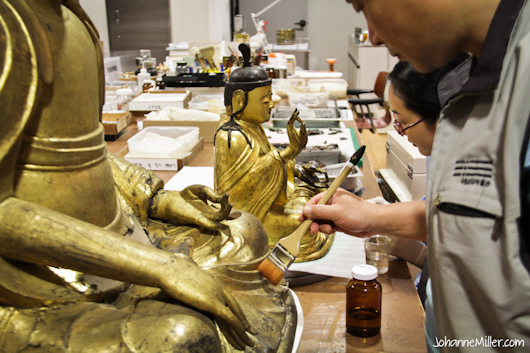
| ▲ 우리나라의 보존과학은 1970년대 시작해 세계 수준에 올랐다. | ||
“독서에서 최고의 순간은 나만 그렇다고 생각했던 것을 책 속에서 발견할 때다. 나만이 가진 특별한 생각과 감정, 그리고 사물을 보는 관점들을 내가 만난 적 없는 누군가 다른 사람이 적어두었을 때다. 그것도 오래 전에 죽은 사람이 말이다. 마치 책 속에서 손이 나와 내 손을 잡아주는 것 같은 기분을 느낀다.” - 앨런 베넷
나는 미국 텍사스의 포트워스에서 자랐다. 역사문화 유산의 중심지는 아니지만 그래도 유물들이 없지는 않았다. 내 조부모는 시카고에 살았는데 그들이 우릴 방문하면 우리 가족은 유명한 필드박물관과 과학산업박물관으로 여행을 갔다. 나는 또 5월이면 루브르와 스미소니언박물관(개인적으로 좋아하는) 등 전 세계의 유명 박물관을 내 라디오 코너에서 특별히 소개한다.
이번 주 Compass에서 내가 서울에서 가장 좋아하는 박물관인 국립중앙박물관을 소개하려 한다. 역사를 이해하는 것은 중요한 일이다. 책으로만 봐서 충분치 않다. 역사를 이해하려면 우리는 역사를 거듭 곱씹어야 한다. 선조들의 삶을 배우고 그들이 경험한 실수를 반복하지 않기 위해서 말이다.
국립중앙박물관은 2차세계대전 직후 작은 규모로 출발했다. 한국이 조선총독부 박물관을 맡으면서 이름을 국립박물관으로 변경했다. 2005년 국립중앙박물관은 현재 자리인 남산 인근 용산으로 옮겨왔다. 국립중앙박물관은 아시아에서 가장 관람객이 많으며 세계에서 가장 훌륭한 박물관 중 하나다.
“만약 역사를 모른다면 아무것도 모르는 것이다. 자신이 나무의 일부라는 것을 모르는 나뭇잎이나 다름없다.“ -마이클 크라이튼
이번 주 국립중앙박물관에 대해 소개하는 이유가 궁금한가? 유물들의 뒷이야기를 말해주기 위해서다. 왜 그 전시물들이 특별한지 말이다. 수많은 사람들이 무료로(국립중앙박물관은 2008년부터 무료다) 상설전시와 순회전시를 관람하지만 역사유물이 어떻게 관리되는지에 대해서 별 관심이 없다.
“우리나라의 보존 과학은 1970년대 초에 시작했어요 하지만 지금은 우리 기술력이 세계수준과 어깨를 나란히 할 정도지요” 박물관 보존과학부 임나현씨의 말이다.
“보존과학 전문가들이 충분치는 않아요. 우리는 초창기보다 발전했지만 유물의 복원 같은 특정 분야들에서는 유럽 같은 선진국에 비해 고급장비와 인력이 부족한 편이에요.”
국립중앙박물관은 열악한 기술과 부족한 인력에도 불구하고 동급의 다른 박물관들에 비해 상당한 성과를 거뒀다. 2012년 국립중앙박물관에 보존과학 전문가는 14명뿐이었다.
생각해 보라. 국립중앙박물관은 상대적으로 적은 지원에도 세계의 여느 박물관들보다 높은 전시수준을 보여주고 있다. 이 점을 생각하면 박물관이 다시 보인다. 또 많은 유물들의 관리에 수고한 이들에게 진심어린 감사를 하지 않을 수 없다.
그래서 당신에게도 박물관 방문을 권한다. 3개 층을 돌아보고 눈이 아니라 마음으로 역사를 느껴보길 바란다. 한국의 역사유산을 보존하기 위해 많은 노력이 필요했다. 이 일에 대해 감사해야 한다.
국립중앙박물관은 오전 9시에서 오후 6시까지 개관한다. 월요일은 휴관이고 수요일과 토요일, 그리고 일요일은 연장운영한다. 월요일이 공휴일일 때 공휴일이 끝난 다음날 대신 휴관한다.
| 스티브 밀러는 미국 출신으로 걸어다니기 전부터 여행가였다. 가족과 함께 미국 전역을 여행하며 모험심을 키웠다. 한국에 온 것은 2009년, 그때부터 한국에 살면서 한반도 구석구석을 여행했다. 아리랑TV와 TBS라디오 등 다양한 프로그램에 출연해 여행기를 소개했으며 개인블로그(http://www.qiranger.com/)를 운영하고 있다. |
 |
||
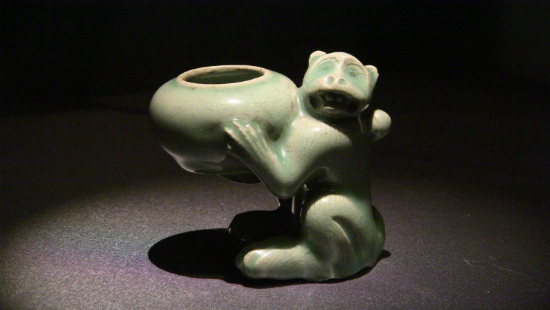
| ▲ 박물관에 전시된 역사유물들 뒤에 많은 노력이 숨어있다. | ||
<원문>
“The best moments in reading are when you come across something - a thought, a feeling, a way of looking at things - which you had thought special and particular to you. And now, here it is, set down by someone else, a person you have never met, someone even who is long dead. And it is as if a hand has come out, and taken yours.” – Alan Bennett
I grew up in Ft. Worth, Texas (USA). It’s not really being known as the center of cultural or historical artifacts, although it did have a few. However, my grandparents did live in Chicago and when visiting them, our family made trips to the famed Field Museum and The Museum of Science and Industry. During the month of May, I’m also highlighting several different world famous museums on my radio segment, including the Louvre and my personal favorite: the Smithsonian Institution. This week in Compass I’m highlighting my favorite museum in Seoul – The National Museum of Korea. I’m doing this because understanding history is important. It’s not enough to look at things in a book, but in order to place things in context and truly learn from our predecessors, we must visit and revisit the topics repeatedly to avoid the same pitfalls they experienced.
Korea’s National Museum had its humble origins immediately following World War II. When Korea assumed control of the Joseon Government-General Museum, administrators changed the name to the National Museum. Flash forward to 2005 and the National Museum of Korea stepped into it current home, located in Yongsan adjacent to Namsan. It’s the busiest museum in Asia and one of the best in the world.
“If you don't know history, then you don't know anything. You are a leaf that doesn't know it is part of a tree. ” – Michael Crichton
So why am I discussing the National Museum this week? Simply put – it’s what goes on behind the scenes, which makes the facility so special. Scores of families have taken advantage of the free admission (introduced in 2008), permanent exhibits, and special rotating collections with nary a thought of what goes into preserving the historical treasures.
 |
||
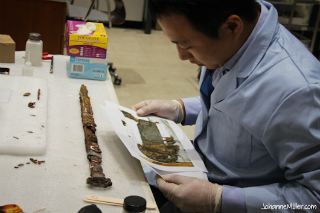
| ▲ In 2012, National Museum of Korea only operated with 14 full-time conservation scientists. | ||
“Our country’s conservation science started from the early 1970’s, and now our technical skills are among the global standards,” said Na-hyun Rim on behalf of the museums Conservation Science Team. “The specialists,” she continues, “in the conservation science area are not enough. We have advanced comparing to the early stage, but in specific areas like conservation-restoration of artifacts, analysis of heritage and environment and accumulation of data are deficient in the terms of specialists and high-tech equipment that the advanced countries, such as Europe, have.” In addition Rim mentioned that compared to other museums of the same caliber, the National Museum is achieving so much more not only with less technology, but also with fewer personnel. In 2012, the museum only operated with 14 full-time conservation scientists.
Think about it. The National Museum of Korea achieved a level of excellence many around the world strive for with comparably less. Taking this into consideration, a trip to the museum takes on a whole new perspective and sincere admiration for all those tasked with the many artifacts’ preservation.
So here’s my challenge to you, visit the museum. Explore its three floors and soak in the history not only with your eyes, but also with your mind. A tremendous amount of time went into preserving Korea’s history and should be appreciated for the great work it is.
The National Museum is open daily 9am to 6pm, closed Mondays with extended hours Wednesday, Saturdays, and Sundays. Should a holiday fall on a Monday, the museum will be open and closed the first non-holiday day.